Evolving Our Teaching Practices Together
Evolving Our Teaching Practices Together

Let it be known that there are many a time as a fourth year TL that I still stand on the shores wondering what is in the ocean. The SAMR (substitution, augmentation, modification, & redefinition) model for technology integration created by Ruben Puentedura reminds us to take a look at our technology resources and how we are using them for learning. This does not mean that we can't still use our word processing tools instead of a pencil even though it is substitution. "While it’s often visualized as a ladder or staircase as above, this can be misleading because Substitution (the bottom of the ladder) is sometimes the best choice for a particular lesson. This is why it’s better to think of the SAMR model more as a spectrum." (Schoology Exchange). This visual of SAMR lets us know that if we want to really impact learners we can get to a redefined learning situation with the help of the technology that is out there. This model is super exciting to me since our library learning commons network committee that I just joined hosted an evening of learning for our TLs. Together with our tech team in school district #23 we explored podcasts, virtual reality goggles and virtual field trips. Using my learning from my participation in the LLCN and this year's teacher collaboration I will talk about evolving both my own and my colleagues teaching practice collaboratively.
VIRTUAL FIELD TRIPS
Sometimes I wonder why anyone signs up to collaborate with me since my invitations usually look something like this:
What: Let's try out our new technology that was just introduced yesterday called virtual field trips.
Why: We can sort out how to use this new and exciting tool together. Hopefully it works and learning around animal habitat can happen and support your curriculum.
When: Soon
Where: In the LLC
Caution: We will be trying this for the first time together.
Teacher "Expert" and Teacher "Brand New" both teach grade one side by side and have developed such a lovely collaborative bond this year in only a few short months. Both were open to the idea of trying our a free virtual field trip with me although in over ten years of working side by side, the LLC has never been a part of "expert" teacher's support plan. Once we talked about the best subject matter available at the time we settled on wetland creatures. The best part was the classroom teachers took it upon themselves to spend the days leading up to the field trip exploring what it means to be a growth mindset learner.

Needless to say the virtual field trip was both a success and a flop. The students and teachers all came together eager to try something new and engage in growth mindset. The technology worked and we all were able to live stream with a presenter in Colorado. Together the teachers were able to answer the questions by typing in student responses and then see the results from around the world calculated digitally and presented as a graph to us. On the other hand this particular VFT was a one way streamable learning activity in which we could see them, but there were dozens of schools logged in so we could only communicate by typing in answers. The presenter was standing in front of a green screen so the visuals were not as stimulating as if they were in a wetland. Also the presentation was better suited for grade five and up really since our littlest students did not have any prior knowledge of wetlands.
All of us felt great though for learning the system that will ultimately offer us the chance for redefinition of learning in the future. To be able to "travel" to other parts of the planet, or even outer space, is such an incredibly powerful experience. This endeavour fueled our fire to try again. I have mutiple VFT by various providers booked over the next few months.
The Concerns-Based Adoption Model is "another framework that has implications for the practices of professional development acknowleges that learning brings change, and supporting people in change is critical for learning to take hold." (The National Academy of Science, 2005). We would not have been successful in pushing the learning forward in the future if as educators we did not work collaboratively to implement and evaluate the technology. I am happy to say that in refering to the CBAM mode,l as shown below, we were both unsuccessful and successful on that day at integrating the technology. Most importantly, as a school their boldness in giving it a shot has led to the renewal level for our school as a whole. We even secured funds for the paid VFT at our last staff meeting thanks to their efforts!
Levels of Use of the Innovation: Typical Behaviors
Levels of Use
|
Behavioral Indicators of Level
|
| VI. Renewal | The user is seeking more effective alternatives to the established use of the innovation. |
| V. Integration | The user is making deliberate efforts to coordinate with others in using the innovation. |
| IVB. Refinement | The user is making changes to increase outcomes. |
| IVA. Routine | The user is making few or no changes and has an established pattern of use. |
| III. Mechanical | The user is making changes to better organize use of the innovation. |
| II. Preparation | The user has definite plans to begin using the innovation. |
| 0I. Orientation | The user is taking the initiative to learn more about the innovation. |
| 0 . Non-Use | The user has no interest, is taking no action. |
DESIGN THINKING
Teachers "Awesome" are in fact three teachers at our school who have created a community learning model with our grade five and six students. Our district tech team is running a series of learning events around design thinking that culminate in an Expo of Awesome where students show their thinking. Teachers "awesome" use technology everyday in a myriad of ways to engage their students and push the learning forward. I am in awe of them and their inquiry based learning classrooms. I decided to jump on board with them to see where I could fit with my vice principal. Having teachers "awesome" and my vice principal as part of the learning and not just part of the end result has really shaped our goals around the Leading Learning standard to "facilitate collaborative engagement to cultivate and empower a community of learners." At the Leading into the Future end of the continuum we hope that the "LLC leadership team and teacher-librarian work with teachers to design challenges to empower student-led collaborative learning. Students learn how to build personal learning networks." In addition to this "school administration works collaboratively with LLC leadership team to lead school improement through the LLC." (Leading Learning, 2014)
After attending the sessions we decided that during our library learning commons time I would break down the parts of the Design Thinking model in a simple format. As it turns out that worked out alright, but because I only saw the students once a week it wasn't riveting. With some patience though we have decided to make an LLC project one of the pitches for their inquiry based learning projects. I am often trying to apply for grants and typically the grant committees ask for letters or a video that demonstrates the needs of our LLC. We will start the pitches this Monday and one idea will be for students to document with the ipads a video that shows literacy in action at ASMatheson Elementary. The goal will be to showcase the classrooms and reasons why literacy and reference resources are important to the learning in a Design Thinking project. We will work our way through the process beginning at empathy by designing a video that speaks to the needs of the K-6 students.
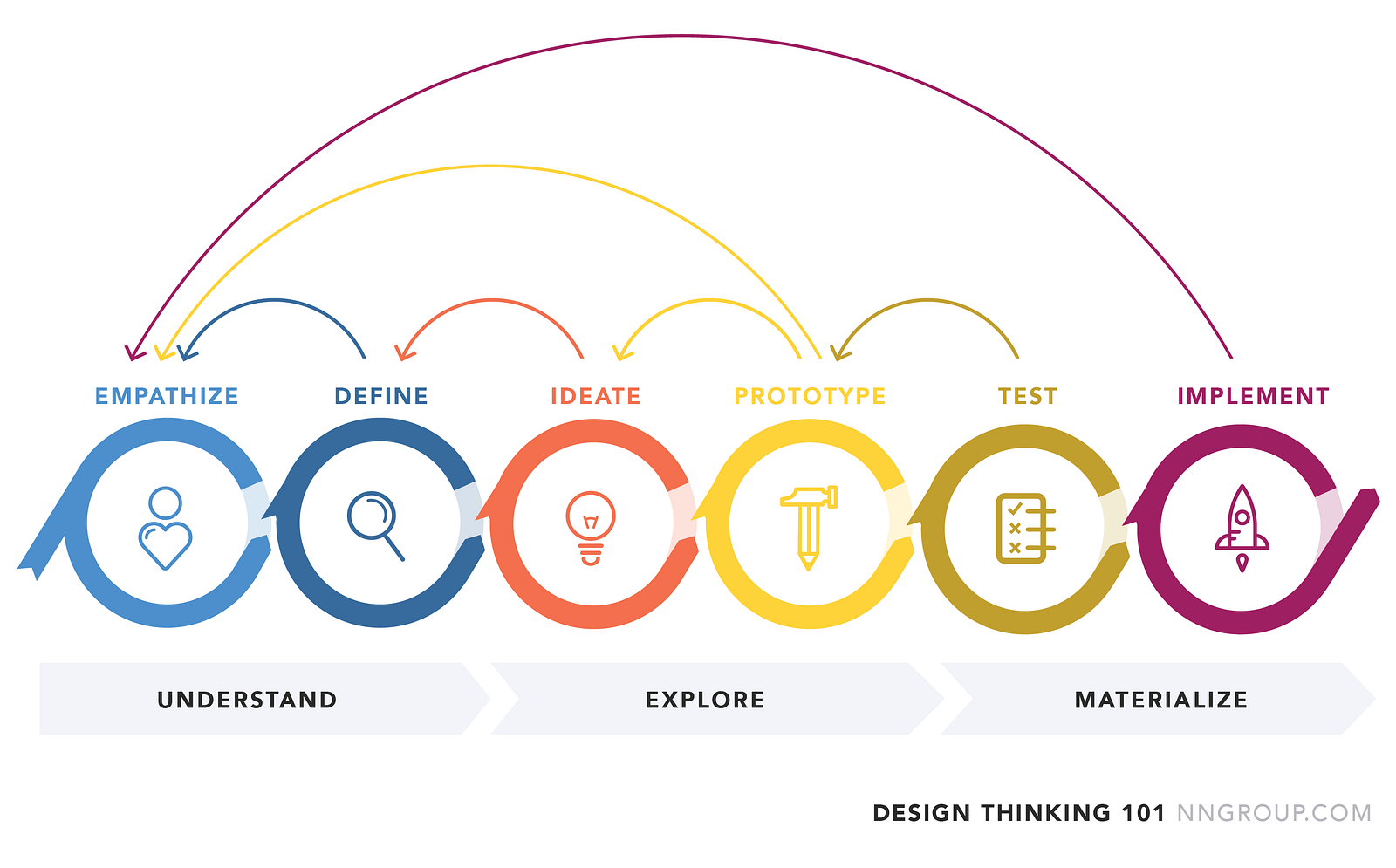 Teachers "awesome" are functioning at a renewal level on the CBAM chart almost consistently. I credit this mostly to their unique relationship with each other and their students. Their classes take collaboration to a new level. Each morning all three homerooms have morning meeting in the gym to discuss the day. Although my time doesn't allow to be as engaged as I would like to with them I am looking for opportunities as they arise. “As a school librarian, the goal should be to look at what students are learning and what teachers are teaching in the classroom and see where your knowledge and skills can fit into that plan.” (Dees, Mayer, Morin & Willis, 2010). This is a good quote to reflect upon as we start to build or continue to build our collaborative teaching lessons.
SOURCES
CLA. (2014). Leading Learning: Standards of Practice for School Library Learning Commons in Canada. Canadian Library Association. p.11
Dees, D., Mayer, A., Morin, H., & Willis, E. (2010). "Librarians as leaders in professional learning communities through technology, literacy, and collaboration." Library Media Connection, 29(2), 10
H.L. "SAMR Model: A practical guide for EdTech integration." Schoology Exchange, Oct. 30, 2017. https://www.schoology.com/blog/samr-model-practical-guide-edtech-integration
"The Concerns-Based Adoption Model (CBAM): A Model for Change in Individuals." The National Academy of Sciences, 2005. http://www.nationalacademies.org/rise/backg4a.htm


Hi Catherine, I love how you said that your Virtual tour was both a success and a failure. I wish we could all that the mindset of looking at the learning that has taken place even if the concept as a whole was not necessarily the success we were wanting. I have never tried a Virtual Field Trip and it sounds quite interesting. Our TLs have not offered this yet in my school but, perhaps I can look into more for my grade 4/5 class....wouldn't it be awesome if we were able to have a VFT of somewhere in France (I teach French Immersion) or Quebec!?
ReplyDeleteYour teachers "Awesome" sound incredible. As it stands, I broach one inquiry per term in my class, usually science-based as I find that content lends itself to that type of learning; however, I don't think I have it in me to make ALL learning inquiry-based! It's a lot of work! Although, I have to say, that if teachers start building the inquiry from kindergarten up, it would be a lot easier to "run" in the intermediate classrooms. I wish, that under "Curriculum" in our BC document, that "Inquiry" was a 'subject' like Sciences or Maths. If we could set goals for teachers to achieve for that year, starting in kindergarten, then we could build upon them like we do in maths, for example. I know, as a classroom teacher, I would say "seriously? another thing I have to fit into my day?" so, maybe (If/when I become a TL), this is an area upon which I could build for my school?
As a TL, it looks like you are doing a lot to support your teachers. Personally, I would be happy with the invitation you sent out...it's got everything I need, disclaimer included, and it's direct and to the point. In our busy days, I like information like that. I often send parent emails in the same vein as I know they are just as busy and want straight-to-the-point info!
Thanks for all your insights! Alison
FYI - totally stealing that Growth Mindset poster! Love it!
I think the way you are running your inquiry is just perfect! Every one needs to find a balance I think. The VFT needs to be set up by your district I think first. We had the tech team come out and hook us all up and then as TLs we are able to outsource trips. Unfortunately some are very expensive.
Delete