AS Matheson's Reference Collection
AS Matheson's Reference Collection

Well here is a sorry state. Our reference collection on countries is housed in a "behind" shelf in an out of the way, low traffic area. My goal is to create a more child centered reference area. At the forefront of my mind is bringing in books that answer the wonderings of the inquiry based projects that the teachers are presenting to the students. "A good reference source is one that serves to answer questions, and a bad reference source is one that fails to answer questions." (Reidling, 2013). I love the simplicity of this statement. It's time to organize the reference section to one that has a purpose and is interesting!
Instead of creating a rubric, which I know is taking a risk since our assignment asks us to do so, I have created a goal for each of the following categories. Relevancy, purpose, currency, curricular connections and efficient use of space. Think of it as category 5 in a 5 point scale rubric. The resource either is a good fit or it is subpar. To place it on the continuum of subpar is not helpful for myself. In other words my rubric is a pass/fail. Partly this help me not overthink absolutely everything like I am prone to do. Sometimes we just need to weed!
RELEVANCY
The book is current.
The resource supports the learning the classroom teacher is engaged in.
Students within grades K-6 could effectively find information within the text.
The index and the presentation of the illustrations/graphs meet the needs of today's students.
PURPOSE
The text is academic/educational in nature.
The resource serves to answer questions students grade K-6 would be asking.
The resource is needed.
The resource is taken into circulation. (We do no place restrictions on our reference collection)
CURRENCY
The resource has been printed in the last 5 or possibly 10 years. (Although relevancy trumps currency)
Facts remain true.
Ideas and opinions are keeping with the times.
Is the resource visually appealing for the times.
CURRICULAR CONNECTIONS
The resource supports the new BC curriculum.
The resource supports Learning in Depth, Design Thinking, Inquiry based projects, Genius Hour etc.
EFFICIENT USE OF SPACE
Are the resources accessible.
Are the resources in an area that is promoted.
If the resource is desired by the students or teachers then the previous four criteria can be overlooked.
Are the books appealing to the eye.
I think most importantly "learners have a right to expect good school libraries in every school in Canada. Our school libraries should reflect our common values of equity, diversity, and cultural identity as well as best apporaches in the educational and library professions. They should be contextually relevant to student need and success, and built, cared for, measured, renewed and sustained on an ongoing basis by their learning communities. We should position school libraries to lead learning for the future." (Leading Learning, 2014). I think if I reflect on this in my selection process for all resources, the LLC will help support the learning that is happening in our school buildings.
PART 1
A True Book Collection: Countries
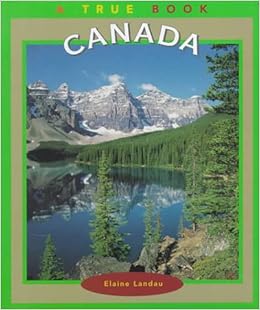
I have chosen to evaluate A True Book Collection: Countries by Children's Press because we have the complete collection in our Library Learning Commons. We have 34 countries represented with these hard cover, library bound books. This excercise in taking the time needed to become familiar with the contents of my resource section has opened my eyes to what it means to know your collection. I always knew these books were on the shelf and where to find them, but I have never read a page of the book! The role of the teacher librarian is a key component to finding information in an elementary school library. "In essence, the school librarian acts as a mediator between the perplexed student and too much, or too little, information. As a mediator, the school librarian weighs the good, the bad, and the indiffrent data to locate accurate sources to meet the information needs of students and to assist students in determining what they need out of the ever-growing masses of print and electronic information." (Reidling, 2013). Talk about overwhelming. I can barely find the time to read an Oprah magazine these days, let alone a reference collection. Somehow though we need to find stolen moments here and there to peek in on our resources and see if they fit with what the classes are working on.
RELEVANCY - The subject matter of countries is relevant to the learning happening in our classrooms. Classes often use countries, animals, habitats, and cultural traditions as starting point in research projects. The book is classified as a grade 2-4 reading level which meets the needs of an elementary library collection. The pictures are not horrible, but not overly engaging. They are dated. Gretzky and a skier named Luke Sauder are the athletes representing Canada. However, the book series about countries is relevant to today's learning.
PURPOSE - This text is academic in nature and answers the factual questions that a grade 2 student might have about a country. There are no deeper thinking or complicated questions answered here. I do believe this resource is needed and the TL who purchased it in 2000 made an excellent choice. It is no longer being circulated. According to library records using Insignia this series has not been signed out since 2003.
CURENCY - This resource is no longer current and students would be gathering inadequate information for the times. Indigenous communities being referred to as "Canadian Indians" is now offensive. Most reference resources about countries would be outdatted after 19 years.

CURRICULAR CONNECTIONS - We currently have students doing inquiry work around housing, shelters, celebrations, weather, forests, and food. These are the ones I can remember off the top of my head. Looking through a set of well equiped resources around countries would be most helpful. New pictures could help trigger new wonders and questions as well. The content from the new BC Curriculum lists "students are expected to know the physiographic features and natural resources of Canada." Also "students are expected to know the development and evolution of Canadian identity over time." (BC's New Curriculum, 2018).
EFFICIENT USE OF SPACE - Nope. A big nope. It's time to make the reference section friendly again for our young learners. Currently the books are being housed in the furthest back corner of the library in stacks.
PART 2
Spotlight on My Country: Canada

I have looked into replacing A True Book Series with Spotlight on My Country Series by Crabtree Books. These books are not library bound hard cover, but rather they are soft cover. I have found that for reference section books that is actually okay. I know that sounds odd to say, but typically our reference section books don't see the same circuation as our graphic novels, for example, and because of their five to ten year life expectancy, I can save heaps of money by going soft cover. The complete set of 19 books costs $189.05 or you can purchase them individually for $9.95.
I have decided to replace my outdated country collection with a new one because after evaluating the original series we had in place I could see their value in terms of curricular connections and serving a purpose for our students. After listing "students are expected to know the development and evolution of Canadian identity over time." (BC's New Curriculum, 2018) this made me think about keeping the old resource as an exellent comparison between the two. Perhaps it would be best to delete the books out of the system and keep on my office shelves though so that they are indeed used for a thought provoking lesson, and not a reference. After all students are expected to "use social studies inquiry process and skills to - ask questions; gather, interpret and analyze ideas; and communicate findings and decisions." (BC Curriculum, 2019)
The Spotlight Series is also highly relevant not only for our ongoing projects, but also for high interest fast reads for many of our new students who have recently arrived in Canada. The series has 19 titles in it representing 19 countries. This collection has books printed from 2008 until 2013. Their update look includes maps and graphs.
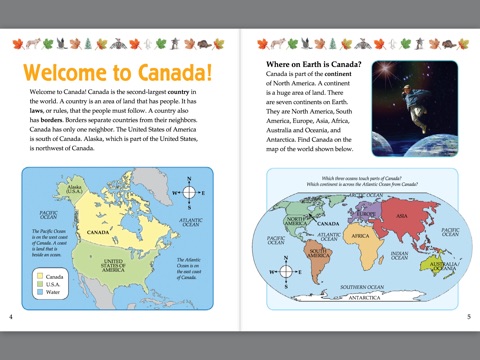
It worries me that some were written as old as 2008, but from the look inside they seem current in their attitudes and language. Has anyone come across an elementary collection for countries that is more current? I would love to know about it if you have.
As for efficient use of space they will go in our easy access bins. Students love flipping through the bins and are use to doing so for our fiction reads as well. As for efficient use of space, these books will be nicely presented in bins with the label "countries" on them. I'm looking forward to working on this section of the library.
PART 3
SOMETHING NEW
After following through with this process of evaluating a reference resource in our LLC, I came across a fantastic reference resource for our inquiry groups. The series is called Mapographica: Your World in Infographics. This is going to be a great resource for our grade 6 students who are wondering about the human impact on the earth. It was printed in 2017 and I can hardly wait to introduce it to our classes and remove our old Atlas. The conversations that are going to arise from these books will be fascinating to listen to. "Whereas the focus of the library program in the past was on bulding strong collections of resources and assisting users to find and use them effectively, the goal now is to build learning community and make connections among learners, thus facilitating knowledge creation in the school community." (Leading Learning, 2014). This is an exciting time to be in the library. Does that mean I don't replace reference material around countries that are the facts? I don't think so. I believe there is a place needed for as many reference materials that we know our students need access to. The order has been placed. Good thing we have a fundraiser happening in the library next week.

CITATIONS
BC's New Curriculum. (2018) Social Studies Curricular Competencies Gr. 2-5. Retrieved from https://curriculum.gov.bc.ca/curriculum/social-studies/5
CLA. (2014). Leading Learning: Standards of Practice for School Library Learning Commons in Canada. Canadian Library Association. p. 4.
Landau, Elaine. (2000). A True Book: Canada. New York, NY: Children's Press.
Riedling, Ann, Shake, Loretta & Houston, Cynthia. (2013). Reference skills for the school library media specialist: Tools and tips, (Third Edition). Santa Barbara, CA: Linworth. p. 4.


Comments
Post a Comment