Libraries - The Beautiful Possibilities
Libraries and IKEA - The Beautiful Possibilities!
One of the things I love about working in a Library Learning Commons is "The Beautiful Possibilites" that it encompasses just like the IKEA commercials lead us to believe that their furniture can inspire the possibilities in your home and your life. Idealistic? Maybe, but the amount of information that is out there now is mind boggling for every scholar and seeker of knowledge. "The Internet is not really a source of information, but rather a means of communication - the "ultimate" communication network." (Riedling, 2013). As I digest this quote I am inspired by the power of humankind and also astounded by the extra work we make for ourselves. Teacher- Librarians have the mamoth task of helping students sift through virtually everyone's thoughts, opinions, and the facts. Together we will be life long learners gathering up the skills necessary to know where to seek out the information we desire.#1 The Reference Process
Before we put on our super hero cape it is probably best to start somewhere more practical. The reference process is key before turning any student over to the world wide web. Let that world wide part sink in for a moment. The entire world is at their fingertips. Inspiring and indimidating. Students should be expected to dive into their topics of inquiry in five basic steps according to Ann Reidling.- A need for information
- A question
- The search for information
- An answer or a response
- An evaluation

This poster has been created by the BC Teacher's Librarians Association and is a student friendly visual for the process.
#2 - Building a Reference Section for our School Library
Now that the students are interested, curious and motivated to investigate their wonders, they need a place to look. The ministry of education has created a thorough list for TLs to refer to when building their reference section. No pun intended! This resource from ERAC (BC Educators Resources Acquisition Consortium) is a little outdated and was created when IRPs were used and not the new curriculum. The points remain relevant though, even if the terminology has evolved.
- Support the learning outcomes of the curriculum (IRP)
- Assist students in making connections between what they learn in school and its practical application in their lives
- Be developmentally and age appropriate
- Support integration across other curricula
- Promote hands-on activities and an applied approach to learning
- Address the learning styles and needs of all students, including English-as-a-Second-Language students and students with special needs
- Assist both specialist and non-specialist teachers
- Provide assessment and evaluation strategies
- Promote personal and intellectual development
- Encourage students to explore careers and/or post-secondary education
- Support teachers in providing learning opportunities to develop information technology and media literacy skills
- Encourage students to use, access, evaluate, analyze,process, and present information using current technology
- Promote awareness of issues and concepts involving science, technology, and society
- Have instructional and technical design integrity.
- Comply with provincial guidelines for social considerations
- Reflect the diversity of cultures, including Aboriginal, in British Columbia and Canada
- Support the principles of sustainability
Keeping this in mind a TL would have to be almighty to be able to assess all resources by the evaluation process outlined in Reidling's Reference Skills for the School Librarian. I myself choose to purchase my reference materials (in book form) from the following reputable sources who have done the evaluation of SCOPE, ACCURACY, PRESENTATION, and DIVERSITY for me. (Reidling, 2013)


#3 - Electronic Reference Materials
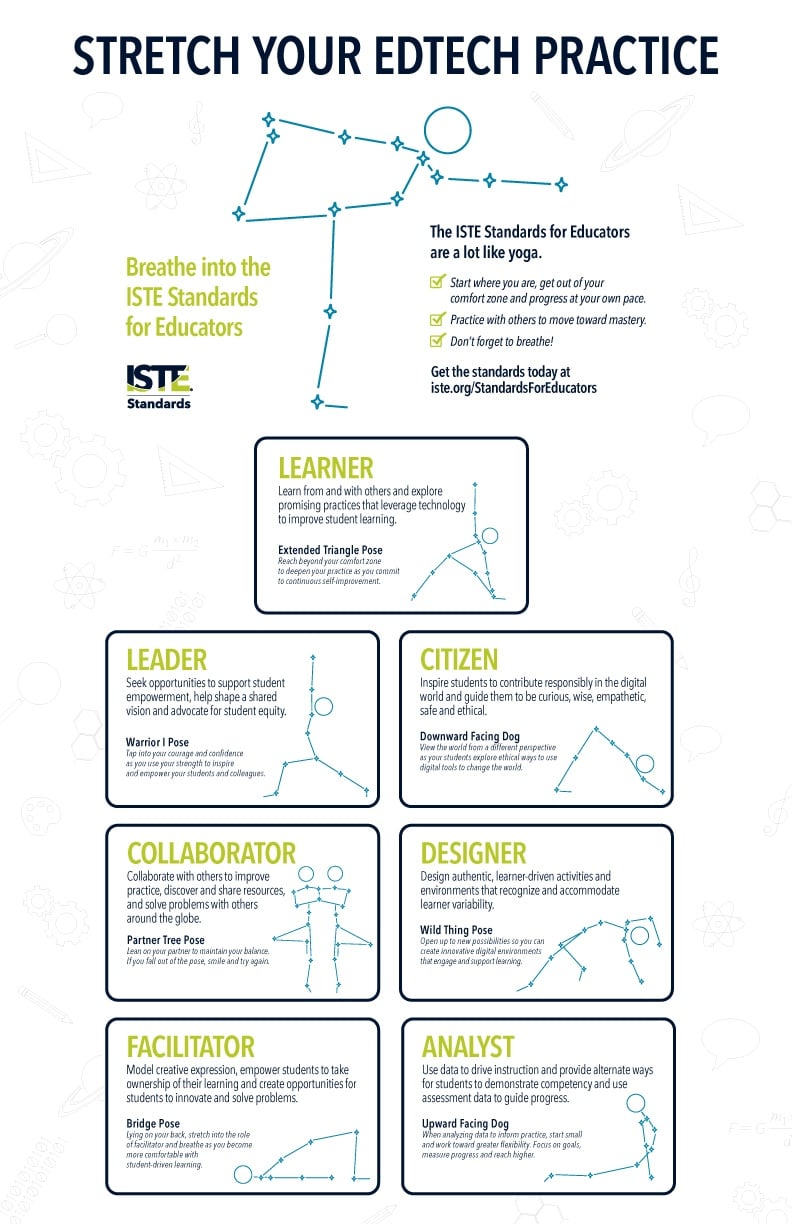
Searching on the web seems infinitely more fun for my students than their reference books. That being said, when they were given their books for their Learning in Depth topics, they were thrilled. When they were ready to delve into searching for their answers on the web, they were engaged and motivated. Building digitally literate students is just as important as the reference materials they access. At times, our students will find themselves on crowd source sites and it will be our job to help them sort through the information.TLs support the classroom learning by empowering our students with the abilities needed to navigate the digital world to find information. In the ISTE (International Society for Technology Information) poster illustrates the importance of tech in demonstrating our learning. Teachers are using technology to create authentic learning opportunities. Sharing that learning with others is part of what the internet is. We need to embrace this forum. Also we need to support the learning that is happening in the classrooms. “As a school librarian, the goal should be to look at what students are learning and what teachers are teaching in the classroom and see where your knowledge and skills can fit into that plan.” (Dees, Mayer, Morin & Willis, 2010).
Beautiful Possibilities Don't Just Happen
In the same way that putting IKEA furniture together is hard work, so too is building an LLC. Sometimes it's like building a plane while flying. Happy flight everyone!Sources
Dees, D., Mayer, A., Morin, H., & Willis, E. (2010). Librarians as leaders in professional learning communities through technology, literacy, and collaboration. Library Media Connection, 29(2), 10-13.
ERAC. Evaluating, Selecting and Managing Learning Resources: A Guide. 2008
Gresset, Reynald. IKEA Wonderful World. 2017. https://www.youtube.com/watch?v=Z9wh1H3gP7w
Gresset, Reynald. IKEA Wonderful World. 2017. https://www.youtube.com/watch?v=Z9wh1H3gP7w
ISTE. Breathe Into the ISTE Standards for Educators. 2016. Retrieved from https://www.iste.org/standards/for-educators
O'Hagan, John. EDS "Airplane". You Tube. Oct. 8, 2007. https://www.youtube.com/watch?v=L2zqTYgcpfg
Riedling, A. Reference skills for the school library media specialist: Tools and tips, (Third Edition). Linworth. 2013. p.6
O'Hagan, John. EDS "Airplane". You Tube. Oct. 8, 2007. https://www.youtube.com/watch?v=L2zqTYgcpfg
Riedling, A. Reference skills for the school library media specialist: Tools and tips, (Third Edition). Linworth. 2013. p.6
BCTLA. The Points of Inquiry: A Framework for Information Literacy and the 21st Century Learner. 2011. Retrieved from https://bctla.ca/resources/point-of-inquiry/


Well done reflection post on your experiences and new learning through the first theme of our course. Your IKEA analogy is a great one, as they have designed their facilities, space and experience to be able to easily find and reference information about products, price, look, and feel, and made things accessible and predictable. Your connections to the other topics, services and roles were also insightful and added to your discussion and reflection on the key learning so far. Your highlights and humour added much to your post, making it accessible and engaging. Good overall look back at your learning so far.
ReplyDeleteHI Catherine, Thanks for the IKEA add - I had never seen it before and it reminds us that perspective, not just as a TL but in life in general, is so important. I love the yoga poses to connect with technology learning...I know my TLs must feel like they need to be warriors to connect with and empower staff and students sometimes! I was just mentioning in Angela's post that my school has chosen to do away with the Reference Section altogether and this seems to be a trend for Elementary schools. Almanacs, journals and other monthly, quarterly references have instead been put into circulation so the students can check them out and for our other reference resources, we have access to online ones purchased by our district (which is becoming the popular way to go!). Now all we need is a class set of computers to be able to access these resources...ahhhh...the challenges!
ReplyDeleteThis course has offered up many new resources when it comes to digital references. Access to the technology is never fluid though. I need to book out the computer lap top cart like everyone else. I often end up using my phone to show students something related to what they are learning about. This is obviously not the best solution.
DeleteI loved the "Stretch Your Edtech Practice" diagram! Useful, cute, and reassuring ;) . I also loved when you said, "together we will be life long learners gathering up the skills necessary to know where to seek out the information we desire". This course, coupled with the fact that I am teaching a New Media English 10 course, is showing me just how much I have to learn....and one of the exciting (and intimidating) things about the Internet is that we will never be masters of it, like you say, we will always have to be learning. It will continue to grow and expand and challenge the way we access, process, and use information. It's a bit overwhelming!
ReplyDeleteThank you, Laura. It certainly is all about stretching our thinking as we are teachers using technology that didn't exist the first time we learned this content!
Delete